 podcast
 video
video  foto
foto


On Friday 10 April, Foundation contributors Jonathan Hankins and Cristina Grasseni participated in a workshop to test the CULTIVATE Food Sharing Calculator. The event also saw the launch of the Costs and Benefits of Food Sharing in Utrecht publication, the third in a series that includes similar reports about Barcelona and Milan.
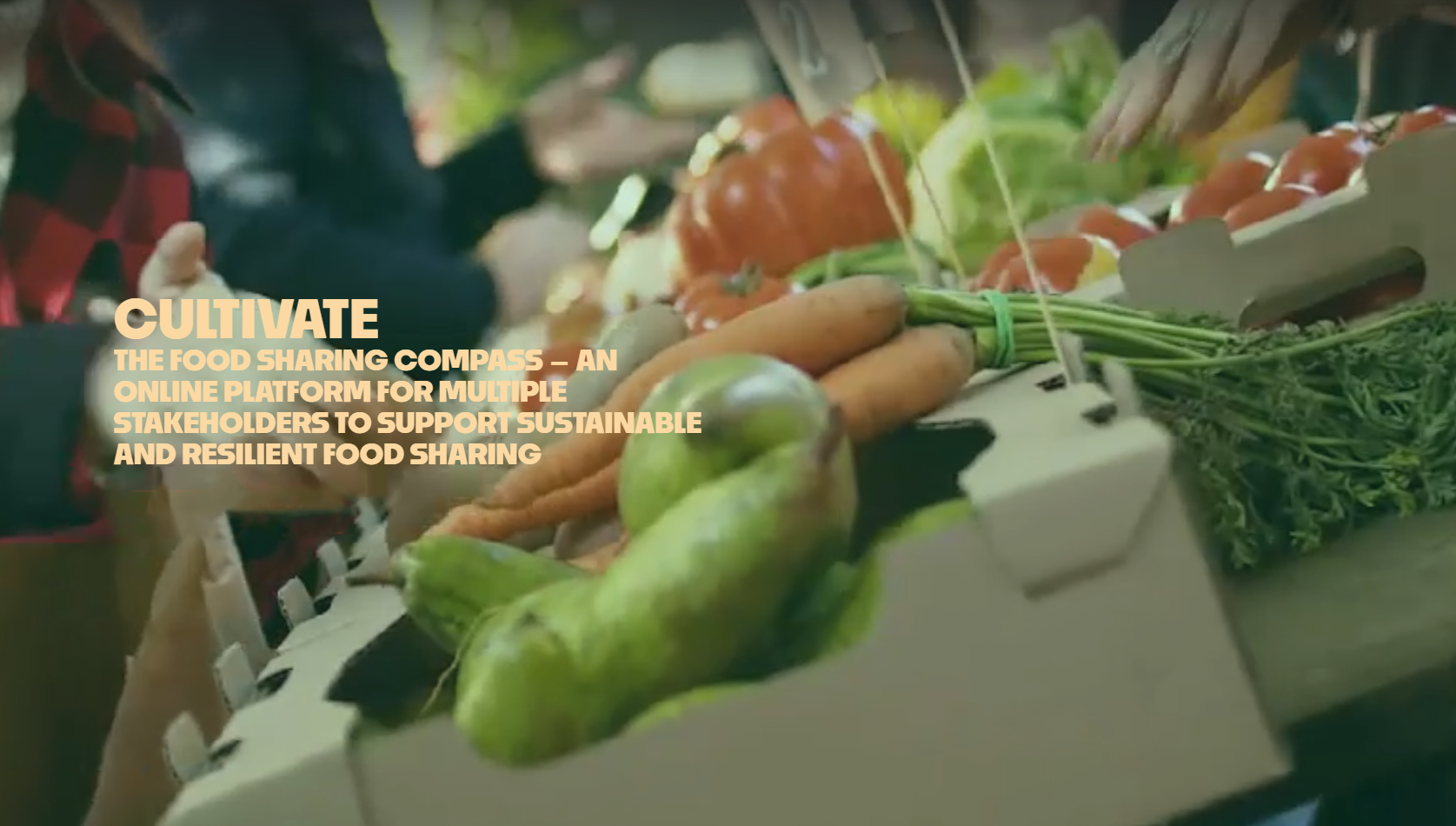
Cultivate is a 4-year project funded by the European Union through its Horizon Europe program (for an overview and some context surrounding the project, see this previous post). With 20 consortium partners including research institutes, municipalities, food sharing initiatives, communication specialists and art collectives, the project aims to support the transition towards more just and sustainable food systems through the development of a food sharing compass. It’s goal is to co-design food sharing innovation for resilience and to help cities navigate towards sustainable food sharing. The project identifies drivers and implementation gaps and challenges existing theories and practices which currently constrain food sharing.
Food sharing within this context includes growing and composting together, cooking and eating together, redistributing surplus food and the sharing of seeds, tools, food, space and knowledge.
The CULTIVATE platform hosts five interactive tools: the Food Sharing Map , the Food Sharing Calculator, the Menu of Good Governance and the Library of Citizen Engagement, offering repositories of best practices of food sharing across Europe.
Food sharing calculator
The food sharing calculator is a tool that enables food-sharing initiatives across Europe to assess costs, benefits and sustainability impacts, an online decision-support tool that makes the value of food sharing visible and measurable. By supporting the assessment of economic, social and environmental impacts, it helps users make smarter decisions and guide strategic investments toward more resilient and sustainable food systems.
The tool is aimed at policy makers, food sharing initiatives (FSIs), food supply actors and researchers, supporting public, private and philanthropic investors as well as citizens seeking clearer evidence of the value created by food sharing.
The calculator has three focus areas: estimating costs of food sharing activities, understanding benefits of food sharing activities and assessing impacts of food sharing activities. During the workshop, participants from a broad spectrum of FSI organizations and individuals with an interest in food and urban greening tested the costs section. Participants presented feedback to the developers, making suggestions about the functionality of the tool as well as discussing how, for what and for whom the calculator could be useful.
Report: Costs and Benefits of Food Sharing in Utrecht
The third of a series of city-wide case studies, the Utrecht report follows on from those depicting Barcelona and Milan. The research employed a Mobile Research Lab (MRL) approach involving desktop analysis, online interviews, fieldwork (site visits, observations and workshops) and thematic data analysis. Regular readers may recall the research team’s visit to Food For Good where they were given a guided tour by Jonathan in March 2025. Food For Good is one of a series of Utrecht case studies that include Restaurant Nula (a circular, zero waste, locally sourced food initiative within the Utrecht City administrative offices where refugees are trained) and BuurtBuik, alongside several other municipal, academic and grassroots stakeholders. The research also included a trip to Rijnvliet, several circular society initiatives and the Transforming Food Systems to Sustainability Research and Practice workshop.
The report discusses business models found in the city, funding sources and typical costs, benefits, challenges, risks, drivers and motivations for food sharing initiatives, as well as narrating personal experiences of those working or volunteering within these initiatives. It’s position in the series allows comparison of governance and policy-making, with Milan offering a particularly interesting contrast due to developments brought about by its Urban Food Policy Pact (MUFPP) of which Utrecht is also a signatory city.
A selection from the Report’s Conclusions
This case study of food sharing in Utrecht shows how food initiatives contribute to social, environmental and economic sustainability. Utrecht’s approach to urban food sharing is characterized by strategic ambiguity in governance, bottom-up innovation, and hybrid organizational models. Unlike cities with centralized food policies (the immediate example being Milan), Utrecht’s landscape thrives through decentralized municipal involvement and a pragmatic regulatory framework which favours tolerance, volunteering, and sustainability and minimizes barriers to experimentation. This approach has enabled a diverse array of FSIs to evolve, integrating non-profits, social enterprises, market-based actors, CSA schemes and local food bag providers.
At the core of Utrecht’s food sharing model is a blend of business forms and operational strategies that prioritize social return on investment, with non-profit structures dominating.
FSIs emphasize education, rehabilitation, and dignified redistribution, foster participation and solidarity, address loneliness and promote cultural integration, reducing food waste while supporting economically disadvantaged populations.
The benefits and perceived value of Utrecht’s FSIs are multifaceted and far-reaching, positioning food sharing as a microcosm of distributed welfare. From a participant perspective, the FSIs enhance social cohesion, combat isolation, improve physical and mental health through nutritious meals and outdoor activities and raise awareness about sustainable food systems.
This is an open access, colourful, nicely written and easy to read document that presents a lot of information and represents the city and its initiatives in a way that Jonathan and Cristina very much recognize, reflecting findings from other projects that the Foundation participates in through its participation in research across social gardens in Utrecht.
Access to all of the tools and publications is free for all those interested.