 podcast
 video
video  photo
photo


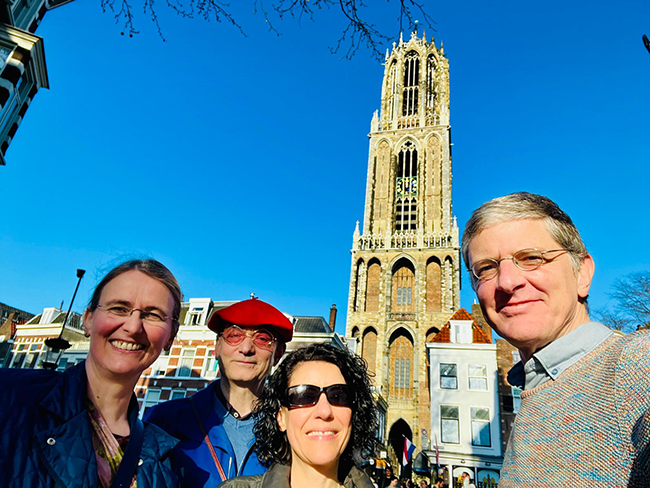
On Friday 5th March, Cristina Grasseni and Myself accepted an invitation from long-time friends of the Foundation Jeff Ubois and Smiljana Antonijevic to attend a book talk with Peter B. Kaufman at the Internet Archive Europe in Amsterdam, of which Jeff is a Board Member.
Internet Archive Europe has been preserving European digital materials since its founding in 2004 in the Netherlands. Working with dozens of European libraries and government agencies to build web collections, Internet Archive Europe initially prioritized collaboration with cultural heritage organizations to safeguard collective history. More recently, and mirroring work currently being carried out at the Bassetti Foundation with President Piero Bassetti’s substantial archive, the library has been leveraging AI and other tools to bring collections to life and demonstrate new interactions.
This vibrant organization hosts regular events across the Netherlands from its HQ in Amsterdam, details of which can be found here.
An Overview of the Book
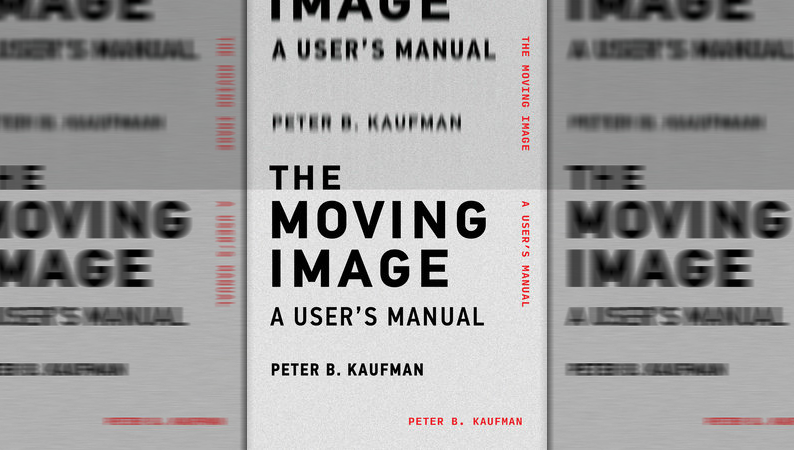
Peter B. Kaufman is Associate Director of Development at MIT Open Learning and author of The New Enlightenment and the Fight to Free Knowledge (Seven Stories Press, 2021) and The Moving Image: A User’s Manual (The MIT Press, 2025), his latest publication being the subject of the evening’s discussion.
Kaufman begins from a perspective that two-thirds of the world’s internet traffic is video. He explains that Americans get their news and information from screens and speakers more than through any other means, but for most writers, educators, publishers, and archivists, video remains something of a foreign country: present everywhere, understood unevenly, and preserved poorly. Referencing standards for video in academic work have still not been fully developed, even though video content functions as a powerful vehicle for knowledge, especially in academic, cultural, and scientific contexts. Audiovisual media are not supplementary, but essential to modern knowledge systems.
Control over their ‘means of production’ and distribution therefore has as much a relationship to power, as it has a relationship to knowledge. But it also has a relationship to capital, politics, access, technological development and distribution.
And how should we think about preservation, if as the author argues, Images are central to how ideas are created, preserved, and disseminated in the 21st century?
The book is available in paperback and as a free download through a creative Commons license.